How to Reduce Wasted Ad Spend and Improve ROAS in 2026
Smart campaign structures and proper conversion tracking are the keys to getting more value from every advertising dollar you spend.


One of the most common problems we encounter when taking over Google Ads accounts is wasted budget flowing to clicks that never convert. At Feo Digital, we typically find that 25–40% of a client's ad spend is going to irrelevant clicks when we first audit their account. Here is how to identify and eliminate that waste.
Why Ad Budgets Get Wasted
The most frequent culprits behind wasted ad spend are poor keyword targeting, uncontrolled broad match usage, missing negative keywords, and inadequate conversion tracking. On top of that, failing to segment audiences properly leads to irrelevant clicks that drain your budget without ever converting. Many advertisers also overlook the message match between their ad copy and landing pages, sending paid traffic to pages that do not deliver on the ad's promise.
How to Eliminate Budget Waste
1. Restructure Your Campaigns
Use a tightly themed campaign structure. Group keywords by search intent and match type. Create dedicated ad groups for your highest-value keywords. Stuffing dozens of keywords with different intents into a single ad group lowers your Quality Score and spreads your budget too thin to be effective.
2. Set Up Complete Conversion Tracking
Without accurate conversion data, your optimization efforts are essentially blind. Implement conversion tracking for every meaningful action — form submissions, phone calls, purchases, and micro-conversions. Google Ads' smart bidding strategies only work correctly when fed reliable conversion data.
3. Use Negative Keywords Aggressively
Review your search terms report at least weekly and add irrelevant queries as negative keywords. For instance, if you sell premium services, adding terms like "free", "cheap", and "DIY" as negatives prevents your ads from showing to users who will never convert. This single step can improve budget efficiency by 15–25% on its own.
4. Optimize Your Landing Pages
Landing page experience directly impacts both Quality Score and conversion rates. Ensure strong message match between ads and landing pages, deliver fast load times, and use clear calls to action. The visitor who clicks your ad should find exactly what they were promised — anything less means wasted spend.
5. Review Geographic and Time-Based Targeting
Analyze your conversion data by day of week and hour of day. Reduce bids or pause ads during time slots that consistently underperform. Similarly, evaluate geographic performance and exclude regions that generate clicks but not conversions.
Conclusion: Spend Smarter, Not Less
Reducing wasted ad spend is not about cutting your budget — it is about allocating it more intelligently. By focusing on campaign structure, conversion tracking, and continuous optimization, you can dramatically improve your ROAS. At Feo Digital, we typically achieve 35–45% efficiency improvements in our clients' Google Ads accounts within the first quarter.
Frequently Asked Questions
What is ROAS and what is considered a good ROAS?
ROAS (Return on Ad Spend) measures the revenue generated for every dollar spent on advertising. A good ROAS varies by industry, but generally 4:1 or higher is considered strong. The key is ensuring your ROAS covers your cost of goods sold and still leaves a healthy profit margin.
How do negative keywords help reduce wasted ad spend?
Negative keywords prevent your ads from appearing for irrelevant searches. For example, if you sell premium services, adding 'free' as a negative keyword stops your ad from showing to users searching for free alternatives — preserving your budget for clicks with a higher likelihood of converting.
What is the most common cause of wasted Google Ads budget?
The most common cause is weak campaign structure combined with overly broad keyword targeting. When campaigns are not organized by intent and match types are too broad, ads trigger for irrelevant searches, generating clicks that never convert and steadily draining your budget.
How does conversion tracking improve ad performance?
Conversion tracking reveals exactly which keywords, ads, and campaigns drive real business results. This data enables automated bidding strategies to optimize toward actual conversions rather than just clicks, significantly improving efficiency and reducing wasted spend.
How long does it take to see improved ROAS after optimization?
Initial improvements typically appear within 2–4 weeks of restructuring campaigns and implementing proper tracking. However, reaching optimal ROAS usually requires 2–3 months of continuous testing, bid adjustments, and landing page refinement to fully materialize.
Related Articles

AI Max for Search: New Google Ads Era (2026)
AI Max for Search brings Google AI into Search campaigns. See how it works, real 2026 performance data, setup steps, and when to use it.
By Feo Digital Editorial Team
Read Article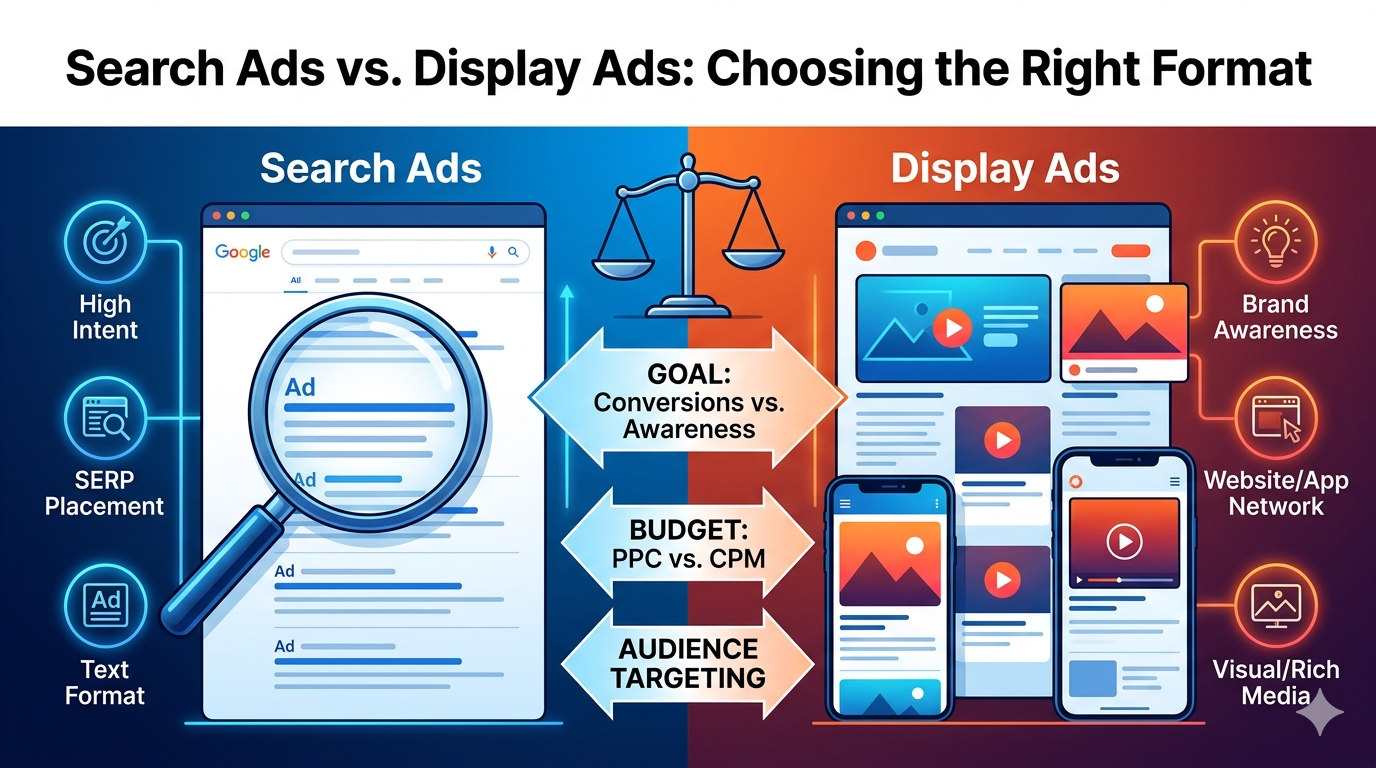
Search Ads vs. Display Ads: Choosing the Right Format
Learn the strengths of each Google Ads format and when to use them for maximum impact, conversions, and return on investment.
By Feo Digital Editorial Team
Read ArticleNeed Help Implementing This?
Our team can help you put these strategies into action. Get a free consultation to discuss your specific needs.
Get a Free Consultation