Paid Social vs. Organic Social: Where Should You Invest?
Understanding the balance between paid and organic social media is the key to building long-term digital growth for your brand.

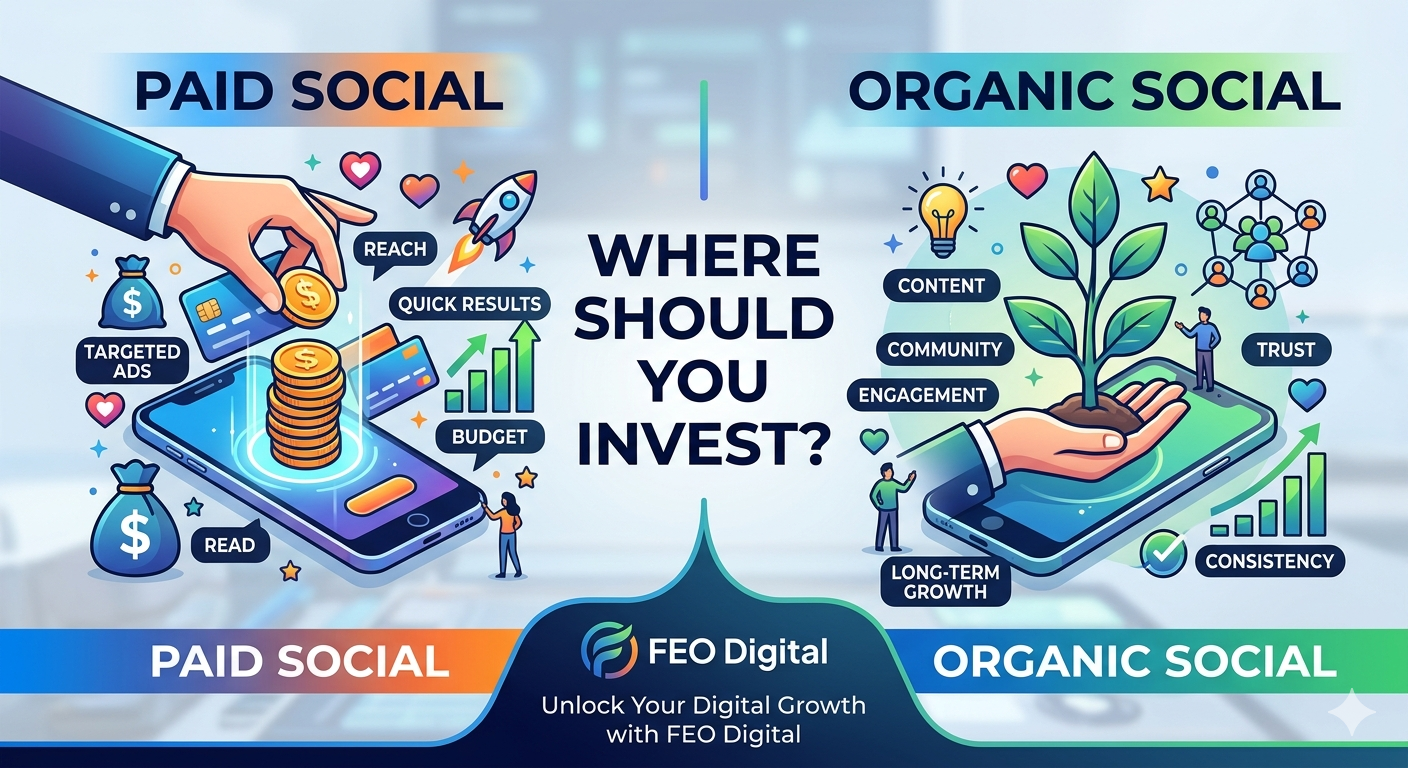
Every business building a social media strategy faces the same fundamental question: organic, paid, or both? At Feo Digital, we always give clients the same honest answer — the right approach depends on your goals, budget, and timeline. But the brands that consistently outperform are the ones investing in both channels simultaneously.
Organic Social: Building Long-Term Brand Equity
Organic social media builds community, trust, and brand awareness over time. It is ideal for nurturing relationships with existing followers, establishing thought leadership in your industry, and reinforcing your brand identity. But let us be realistic: as platforms have shifted toward pay-to-play models, organic reach has dropped dramatically. On Facebook, business page organic reach averages just 2–5%. Instagram is slightly higher but trending downward consistently.
Paid Social: Immediate Reach and Measurable Results
Paid social advertising lets you reach precisely defined audiences at scale. With advanced targeting on platforms like Meta (Facebook and Instagram), LinkedIn, TikTok, and X, you can place your message in front of high-intent users and measure the return on every dollar spent. Retargeting campaigns let you re-engage users who visited your site but did not convert — often the highest-ROI campaigns you can run.
Which Platform Fits Which Business Model?
For B2C Brands
Instagram, TikTok, and Facebook are the most effective platforms. Visual content, story formats, and short-form video build strong connections with consumer audiences. For product-based businesses, Instagram Shopping and TikTok Shop create direct sales channels right within the platform.
For B2B and Enterprise Companies
LinkedIn stands out with its professional targeting capabilities — you can target by job title, company size, industry, and seniority level. That said, Meta Ads can also perform well for B2B when leveraging custom audiences and lookalike targeting to reach decision-makers outside of LinkedIn.
The Integrated Approach: Using Both Together
The most successful brands invest in both channels. Use organic social to build your brand foundation and community, then amplify your best-performing content and offers through paid campaigns. Your organic presence builds credibility — when prospects click through from an ad to your profile, an active and engaging organic feed reinforces trust in your brand.
Conclusion: Do Not Choose — Combine
Instead of choosing between organic and paid social media, build an integrated strategy that leverages the strengths of both. Organic content feeds your brand credibility while paid campaigns accelerate growth and drive measurable results. This combined approach maximizes both short-term performance and long-term sustainable growth.
Frequently Asked Questions
What is the difference between paid and organic social media?
Organic social media involves posting content without paying for distribution — your reach depends on your follower count and platform algorithms. Paid social media involves paying to show your content or ads to targeted audiences beyond your existing followers, offering precise targeting and fully measurable results.
Why has organic social media reach declined?
Social platforms have shifted toward pay-to-play models. As the volume of published content has increased, algorithms prioritize paid content and posts from friends and family over brand content. On Facebook, organic reach for business pages averages just 2–5%, making paid amplification essential for meaningful visibility.
Which social media platform is best for B2B advertising?
LinkedIn is typically the most effective for B2B advertising thanks to its professional targeting options — you can target by job title, company size, industry, and seniority. However, Meta Ads can also deliver strong B2B results when using custom audiences and lookalike targeting to reach professional decision-makers.
How much budget should you allocate to paid social media?
Budget allocation depends on your goals, industry, and audience size. A common starting point is 10–20% of your total marketing budget. Begin with a test budget to establish baseline metrics, then scale investment toward the channels and campaigns delivering the strongest ROI.
Can you run paid social media without organic content?
Technically yes, but it is not recommended. Organic content builds credibility and trust — when potential customers click through from an ad to your profile, an active and engaging organic presence reinforces your brand. The best results consistently come from integrating both approaches.
Need Help Implementing This?
Our team can help you put these strategies into action. Get a free consultation to discuss your specific needs.
Get a Free Consultation